EB-2 NIW Visa
The EB-2 National Interest Waiver (NIW) visa is a category of U.S. immigrant visa designed for foreign professionals with extraordinary ability in science, research, business, or other fields that can significantly benefit the national interests of the United States. The EB-2 NIW program allows applicants to bypass the employer sponsorship or labor certification requirements.
To apply for an EB-2 NIW visa, a candidate must demonstrate their uniqueness and expertise in their field, as well as prove that their work has a broad national or even international impact and can significantly benefit the United States. The candidate must also demonstrate that their participation in the field is necessary for the national interest and that obtaining a green card under this category would be in the interests of the United States.
The EB-2 NIW visa application process is complex and requires the preparation of documents, including a resume, letters of recommendation, publications, certifications, and other materials that support the uniqueness and significance of the applicant’s work.
Who Still Qualifies for EB-2 NIW in 2026
EB-2 NIW is not limited to scientists or academics, although they are among the most common applicants. In 2026, the category remains open to a broad range of professionals, provided they can build a persuasive Dhanasar argument.
Fields that have historically produced successful NIW petitions include:
- STEM researchers and engineers, particularly those working on issues with clear implications for national security, healthcare, or infrastructure.
- Healthcare professionals, including physicians who have agreed to serve medically underserved communities, although this is often associated with a separate statutory provision rather than the standard Dhanasar pathway.
- Data scientists and AI researchers contributing to fields in which the United States has identified strategic interests.
- Educators, particularly those whose work addresses systemic gaps in access to education or serves critically underserved areas.
- Entrepreneurs and startup founders whose businesses address significant national economic, healthcare, or military needs and have demonstrated growth or funding.
- Policy researchers, economists, and public health professionals whose published work informs decision-making at the national level.
- Arts and cultural professionals with documented national reach, although such cases require compelling objective evidence to withstand scrutiny.
The common thread is not the job title, but the ability to formulate a coherent, evidence-supported argument addressing all three Dhanasar criteria. An applicant in any field may succeed if the petition is properly structured. An applicant with impressive qualifications may fail if the case is approached incorrectly, even in a traditionally favorable field.
What Gets Approved: Evidence and Positioning
Approved EB-2 NIW petitions in 2026 generally share a common set of characteristics. Understanding these patterns helps applicants assess their readiness before filing.
A Specific, Clearly Defined Proposed Endeavor
The most important structural element of an approved petition is a well-defined proposed endeavor. USCIS officers need to understand exactly what the applicant will do in the United States—not in vague or idealistic terms, but with enough specificity to evaluate whether it has national importance and whether this particular person is well positioned to advance it.
Petitions stating something like “I plan to conduct research in artificial intelligence” may lead to a denial. Petitions stating “I am developing machine-learning models to improve the early detection of antibiotic-resistant infections in hospital settings, reducing mortality in a population where current protocols are ineffective” give USCIS something concrete to evaluate.
Independent Evidence of Previous Impact
USCIS expects specific, independently verifiable evidence that the applicant has already demonstrated an ability to make meaningful contributions to the field.
For researchers, this generally means citation counts, peer-reviewed publications in recognized journals, invited conference presentations, and evidence that others in the field have used the applicant’s work or reproduced their findings.
For entrepreneurs or practitioners, this may mean documented results, independent recognition, adoption of methods or tools developed by the applicant, coverage in recognized industry publications, or grants awarded through competitive peer-review processes.
Recommendation Letters That Address the Right Issues
Recommendation letters are one of the most frequently misused elements of NIW petitions. Many petitions include letters from impressive individuals who provide very little useful information.
USCIS does not need letters simply confirming that quantum computing is an important field. USCIS needs letters that explain, based on the specific knowledge of someone who is directly familiar with the applicant’s work, why that person’s particular contribution is important and why the proposed endeavor represents substantial national interest.
Strong recommendation letters come from recognized experts who independently know the applicant’s work and can discuss its specific value, rather than from supervisors writing letters merely as a matter of professional courtesy.
A Credible Plan for Implementing the Proposed Endeavor
Criterion 2 of the Dhanasar test requires the applicant to demonstrate that they are well positioned to advance the proposed endeavor.
This means the petition should connect the applicant’s qualifications, previous track record, and proposed work into a coherent narrative.
A plan to conduct research on power-grid resilience is more persuasive when the applicant has published on the subject, established collaborations with relevant institutions, and can point to an active research pipeline rather than a future intention unsupported by current activity.
What Gets Denied: Patterns That Lead to Failure
Just as approved petitions share common characteristics, denied petitions tend to fail in recognizable and preventable ways. Understanding denial patterns is just as important as understanding approval patterns.
Vague or Overly Broad Proposed Endeavors
When an applicant describes the proposed endeavor in terms so broad that virtually any qualified professional in the field could make the same argument, USCIS has less basis for determining why the case applies specifically to that individual.
Breadth can signal that the applicant has not sufficiently thought through what exactly they plan to do and what specifically makes their work nationally important. USCIS officers regularly encounter such unfocused petitions, and the result may be a Request for Evidence or a denial under Criterion 1.
Confusing the Importance of the Field with the Applicant’s Individual Contribution
One of the most persistent mistakes in NIW petitions is confusing the importance of a field with the applicant’s individual contribution to it.
USCIS does not need to be convinced that cancer research, cybersecurity, or renewable energy are important national priorities. Those facts are generally accepted. What USCIS needs is evidence that this particular applicant is doing something in the field that rises to the level of substantial merit and national importance, and that this particular person is well positioned to advance a defined endeavor.
Failing to articulate this individual argument can result in a denial.
Low Citation Counts or Lack of Independent Recognition
Academic researchers who have published but have not been independently cited by others in their field may face a structural challenge in NIW petitions.
Citations are one of the clearest objective indicators that work has influenced the field beyond the applicant’s own research group. A publication record with very few citations, or without evidence that anyone outside the applicant’s institution has engaged with the work, can weaken Criterion 2.
A petition can still be built around other evidence, but this may require a more carefully developed strategy and stronger support from other objective indicators.
Generic Recommendation Letters
A collection of letters from department chairs and distinguished professors praising an applicant’s academic credentials, but saying nothing specific about the proposed endeavor or why a waiver is justified, is one of the weaker forms of support.
USCIS officers have seen many such letters. They may add weight to an applicant’s qualifications, but they do little to establish national importance or justify a waiver of the labor certification requirement. They may even suggest that the applicant’s legal team did not understand what the letters needed to establish.
Incorrect Identification of the Underlying EB-2 Category
Applicants sometimes file under the exceptional-ability pathway without actually meeting three of the six regulatory criteria, or claim to hold an advanced degree based on foreign educational credentials that, without proper evaluation, do not clearly translate into the equivalent of a U.S. master’s degree.
If the underlying EB-2 category is not properly established before USCIS even reaches the Dhanasar analysis, the petition can fail on threshold grounds regardless of how strong the NIW argument might otherwise have been.
Legal Framework: The Three-Prong Dhanasar Test
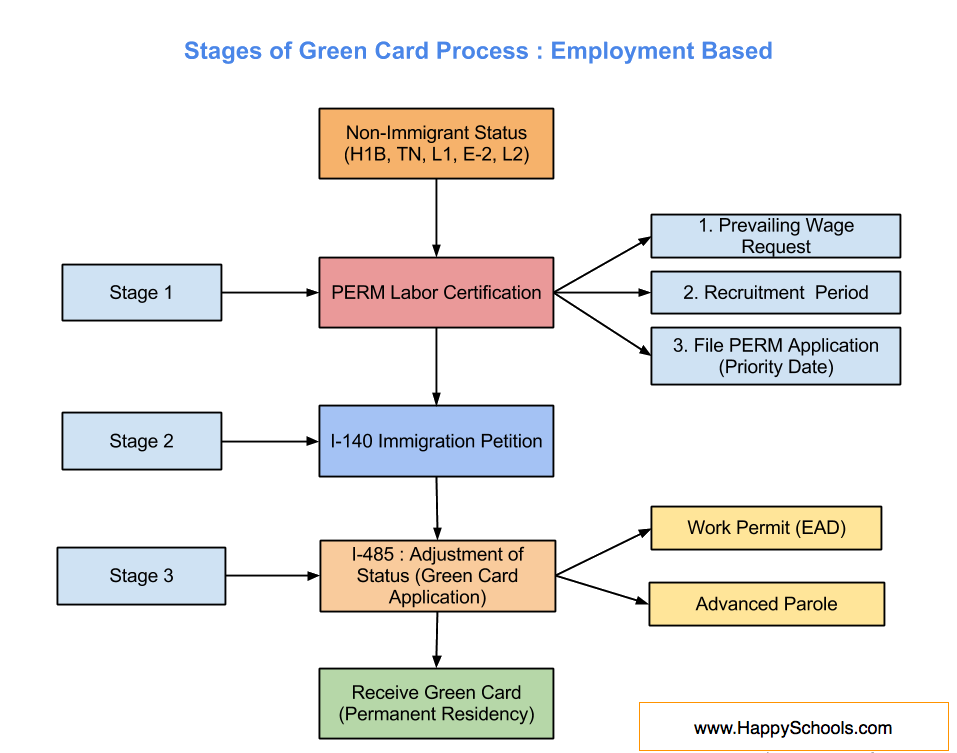
The EB-2 NIW category exists within the employment-based second preference category of U.S. immigration law. To file a petition, the applicant must first meet the requirements for EB-2 — either by holding an advanced degree or by demonstrating exceptional ability in the sciences, arts, or business.
Then, in order to obtain a waiver of the usual job-offer and PERM labor certification requirements, the applicant must satisfy the three-prong test adopted by USCIS in the 2016 administrative decision known as Matter of Dhanasar.
The three criteria are as follows:
- Criterion 1 — Substantial Merit and National Importance: The proposed endeavor must have both substantial merit and national importance. The work cannot simply benefit a local employer or a narrow research group. It must have significance at the national level.
- Criterion 2 — Well Positioned to Advance the Endeavor: The applicant must demonstrate through their education, skills, track record of success, and specific plans that they are well positioned to advance the proposed endeavor in a concrete and credible manner.
- Criterion 3 — On Balance, Beneficial to Waive the Requirements: It must be in the national interest to waive the requirement that the applicant obtain a job offer and undergo the labor certification process. This criterion considers whether the endeavor would suffer without the waiver or whether the applicant’s unique position makes granting the waiver a logical conclusion.
All three criteria must be satisfied. Weakness in even one of them may give USCIS grounds to issue a Request for Evidence (RFE) or directly deny the petition. The Dhanasar framework is not a checklist for a quick review, but a structured argument that requires careful development supported by evidence.
Practical Takeaways for 2026
If you are evaluating whether EB-2 NIW makes sense for you in 2026, the following is a useful starting point:
- Start with the basic category. Confirm that you actually meet the EB-2 standard — either through the advanced-degree criterion or the exceptional-ability criteria — before thinking about the NIW argument.
- Define a specific proposed endeavor before you write a single word of the petition. If you cannot describe your proposed endeavor in two or three sentences with enough specificity for an unfamiliar person to evaluate it, the endeavor is not yet sufficiently defined to build a petition around it.
- Objectively assess your evidence. Evaluate your track record of citations, publication history, independent recognition, awards, grants, and any other objective indicators of prior impact. If your track record is limited, consider whether waiting to strengthen it may be strategically more reasonable than filing now.
- Choose recommenders strategically. Identify people who can speak specifically about your proposed endeavor and your individual contributions, rather than simply about the importance of your field.
- Build the petition letter as a legal document, not a résumé. Each Dhanasar criterion needs its own section with arguments supported by evidence and tailored to your specific facts.
Priority Dates and Visa Availability
Even an approved EB-2 NIW petition does not immediately lead to a green card for nationals of countries with high levels of immigration demand, including India and China. For nationals of these countries, delays in the EB-2 priority date mean that an approved I-140 petition may remain pending for years before a visa number becomes available. Planning an NIW strategy should therefore take priority-date realities into account, not just petition approval timelines.
Frequently Asked Questions
Who qualifies for EB-2 NIW in 2026?
To obtain EB-2 NIW, an applicant must first meet the basic EB-2 standard — either by having an advanced degree or by demonstrating exceptional ability in the sciences, arts, or business. The applicant must then satisfy the three-prong Dhanasar test: the proposed endeavor must have substantial merit and national importance; the applicant must be well positioned to advance it; and, on balance, it must be beneficial to waive the job-offer and labor-certification requirements in the national interest. All three criteria must be demonstrated with specific, objective evidence.
What evidence do approved EB-2 NIW petitions include?
Approved petitions commonly combine independent citations of peer-reviewed publications, objective evidence of prior contributions such as grants and awards, recommendation letters from recognized experts who can specifically address the national importance of the proposed endeavor, a well-defined and appropriately focused proposed endeavor, and a credible plan showing that the applicant is actively pursuing that endeavor. The quality and combination of evidence matter more than the length of the petition.
What are the most common reasons for denial of EB-2 NIW petitions?
Common reasons for denial include: a proposed endeavor that is too vague or broad to be meaningfully evaluated under Criterion 1; recommendation letters that praise the applicant’s qualifications without addressing national importance or the specific proposed endeavor; failure to distinguish the applicant’s individual contributions from the general importance of the field; insufficient independent recognition or citation evidence under Criterion 2; and inadequate consideration of Criterion 3, which requires its own affirmative argument beyond what has already been established under the first two criteria.
Can a self-employed person or entrepreneur qualify for EB-2 NIW?
Yes. EB-2 NIW does not require an employer sponsor or a job offer, which means that self-employed individuals, independent researchers, consultants, and entrepreneurs can file on their own behalf. The applicant must still meet the basic EB-2 standard and build a persuasive Dhanasar argument, but the absence of an employer is not itself a disqualifying factor.
For entrepreneurs specifically, the petition should demonstrate that the enterprise addresses a significant national need and that the applicant is a key driver of the proposed endeavor, supported by evidence of growth, funding, or independent recognition.